What is a reverse distribution?
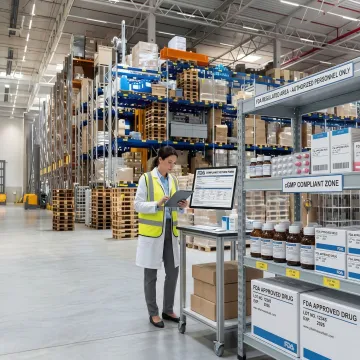
Reverse distribution is the movement of product backward through the supply chain, from an end user or distributor back toward the manufacturer, a returns processor, or a disposal facility. In the United States the phrase also names two regulated statuses: DEA registers reverse distributors as a distinct business activity under 21 CFR 1301.13 to receive controlled substances from other registrants, and EPA sets separate standards at 40 CFR 266.510 for reverse distributors handling creditable hazardous waste pharmaceuticals. Returns outside those two regimes are commercial reverse logistics.
What does a reverse distributor do?
A DEA-registered reverse distributor receives controlled substances from other DEA registrants and processes them for return to the manufacturer or for destruction, holding a registration issued specifically for that business activity under 21 CFR 1301.13. That is a licensed role, not a service tier. Blue Bonnet Supplies provides commercial reverse logistics instead: issuing return authorizations, receiving and inspecting returned goods, sorting by condition, documenting chain of custody, supporting credit submissions where applicable, and returning sellable units to inventory — for medical devices, supplements and consumer health products.
Which pharmaceutical products are eligible for reverse distribution?
Controlled substances may only be transferred to a party registered with DEA for that activity, which places them outside the scope of a general 3PL. Non-controlled commercial goods — medical devices, dietary supplements, over-the-counter and consumer health products — move through ordinary reverse logistics: expired, damaged, overstocked, recalled or short-dated units are received, identified, quarantined and assessed against your disposition criteria before anything is restocked, credited or destroyed. We confirm the regulatory classification of your catalog before onboarding rather than at the receiving dock.
How does Blue Bonnet ensure regulatory compliance during reverse distribution?
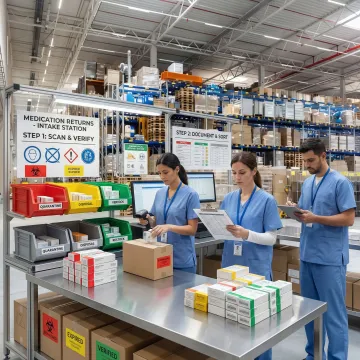
Every returned unit is identified and quarantined on arrival and stays segregated from sellable stock until a documented disposition decision is made. That sequence mirrors the rule governing returned dietary supplements: 21 CFR 111.510 requires returned product to be identified and quarantined until quality control personnel complete a material review and reach a disposition decision, and 21 CFR 111.515 requires destruction or suitable disposal unless salvage or reprocessing is approved. We apply the same quarantine-first discipline across devices and consumer health goods, with chain-of-custody records and a disposition report each cycle.
How long does the reverse distribution process typically take?
Most commercial reverse logistics cycles, from inbound receiving through final disposition reporting, are completed within 7 to 21 business days. Timelines vary with the volume of returned product, the complexity of the disposition required, and whether manufacturer credit processing is involved. We communicate at each stage so clients always know exactly where their returned inventory stands.
Do you handle the disposal of expired or recalled pharmaceutical products?
Expired or recalled controlled substances and hazardous waste pharmaceuticals must go to a handler holding the matching registration — DEA for controlled substances, and an EPA-notified reverse distributor under 40 CFR 266.510 for creditable hazardous waste pharmaceuticals. That work sits outside Blue Bonnet Supplies' scope, and we say so at intake rather than after the pallet arrives. For non-controlled commercial goods we manage the disposition route you approve, coordinate destruction through permitted vendors where that is the outcome, and provide the documentation your audits require.
Can you process manufacturer credits for returned pharmaceutical products?
Yes, for non-controlled commercial goods that qualify for manufacturer or distributor credit we handle the documentation, sorting and submission on your behalf. Each eligible item is catalogued with lot numbers, expiration data and return authorization details so credit claims hold up to scrutiny. Our team makes sure the paperwork is complete and properly submitted, helping your business recover the maximum allowable credit from returned inventory.
Is reverse distribution different from standard product returns processing?
Yes, and in the United States the difference is legal rather than merely operational. Reverse distribution in its regulated sense is a licensed activity: DEA registers reverse distributors under 21 CFR 1301.13 to receive controlled substances from other registrants, and EPA's rule at 40 CFR 266.510 governs reverse distributors accumulating potentially creditable hazardous waste pharmaceuticals. Standard returns processing — receiving a customer return, inspecting it, deciding whether it can be resold, and documenting the outcome — requires neither registration, and is what most brands actually need. Blue Bonnet Supplies provides the second. Establishing which one your catalog requires is the most useful thing to settle before choosing a returns partner.