A surgical pack is a pre-assembled, sterile set of the drapes, gowns, gauze and single-use instruments needed for one specific procedure, packaged together so the operating room opens one sterile unit instead of many. Packs are assembled to a fixed bill of materials, sealed in a validated sterile barrier system, terminally sterilized, then labeled with lot number, expiration date and sterilization method.
What are the 7 types of packaging?
Packaging is usually grouped into seven types: primary (touches the product), secondary (cartons and labels), tertiary (bulk transport), flexible (pouches, films), rigid (boxes, trays), semi-rigid (clamshells) and sterile barrier packaging. For a terminally sterilized device the sterile barrier system controls, and FDA recognizes ISO 11607-1: https://www.accessdata.fda.gov/scripts/cdrh/cfdocs/cfStandards/detail.cfm?standard__identification_no=44769
What are the four types of packaging?
The four packaging levels are primary (touches the product), secondary (the carton, label and kit that group primary units), tertiary (the shipping case or pallet), and ancillary protective materials such as foam, cushioning and desiccants. In medical device packaging, primary packaging is the sterile barrier system, while secondary packaging carries the labeling, barcode and unique device identifier the package must show under 21 CFR Parts 801 and 830.
What does FDA-cleared medical packaging mean?
FDA-cleared medical packaging means the packaging materials, sterile barrier system and labeling were reviewed and cleared together with the device they protect: seal strength, integrity test data and shelf-life claims are evaluated in that device's 510(k) or PMA submission. Packaging and labeling then run under the device quality system, where 21 CFR 820.45 requires each label and package to be examined for accuracy before release.
Do you provide sterile packaging for medical devices?
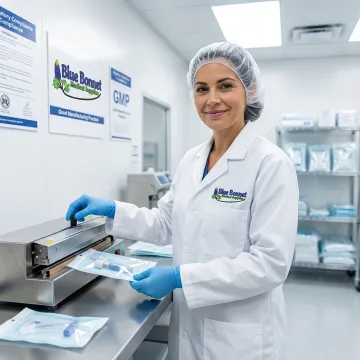
Yes. Sterile packaging solutions are a named Blue Bonnet Supplies service: sterile packing for medical devices, sterile barrier materials, tamper-evident seals and FDA-compliant labeling, handled in our climate-controlled Cedar Park facility. Devices arriving in a validated sterile barrier system are packed, kitted and stored without breaching it, and we can provide packaging validation showing your packaging holds up under shipping conditions.
Can you handle custom kitting for medical product orders?
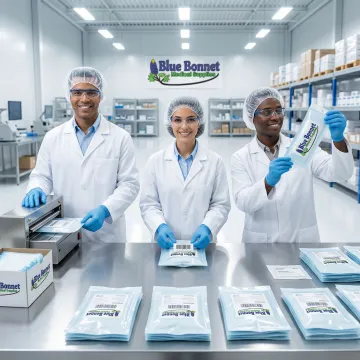
Kitting is the assembly of several separate items into one ready-to-ship unit under a single SKU. Blue Bonnet Supplies builds medical kits to a fixed bill of materials, verifies each component before the kit is closed, then labels and barcodes the outer pack so it states the contents accurately - for retail, Amazon FBA or direct customer orders. Kits are packed so the inner sterile units are not stressed in transit.
Do you support international shipping of packaged medical products?
Yes. Our shipping and logistics service covers international courier options for medical products. We handle FDA-compliant documentation, customs compliance checks to prevent delays, and proper packaging suited for international transit. Our direct carrier relationships also provide discounted shipping rates, helping reduce the cost of moving medical products across borders while maintaining full regulatory compliance.
How do you ensure packaging compliance for medical products?
Packaging compliance rests on three checks: the right material and seal for the sterilization method, an accurate, complete label, and a pre-release inspection recorded before shipping. Blue Bonnet Supplies is ISO 13485 certified and follows FDA clearance for packaging and handling; 21 CFR 820.45 requires labeling and packaging to be examined for accuracy before release: https://www.ecfr.gov/current/title-21/chapter-I/subchapter-H/part-820/section-820.45